
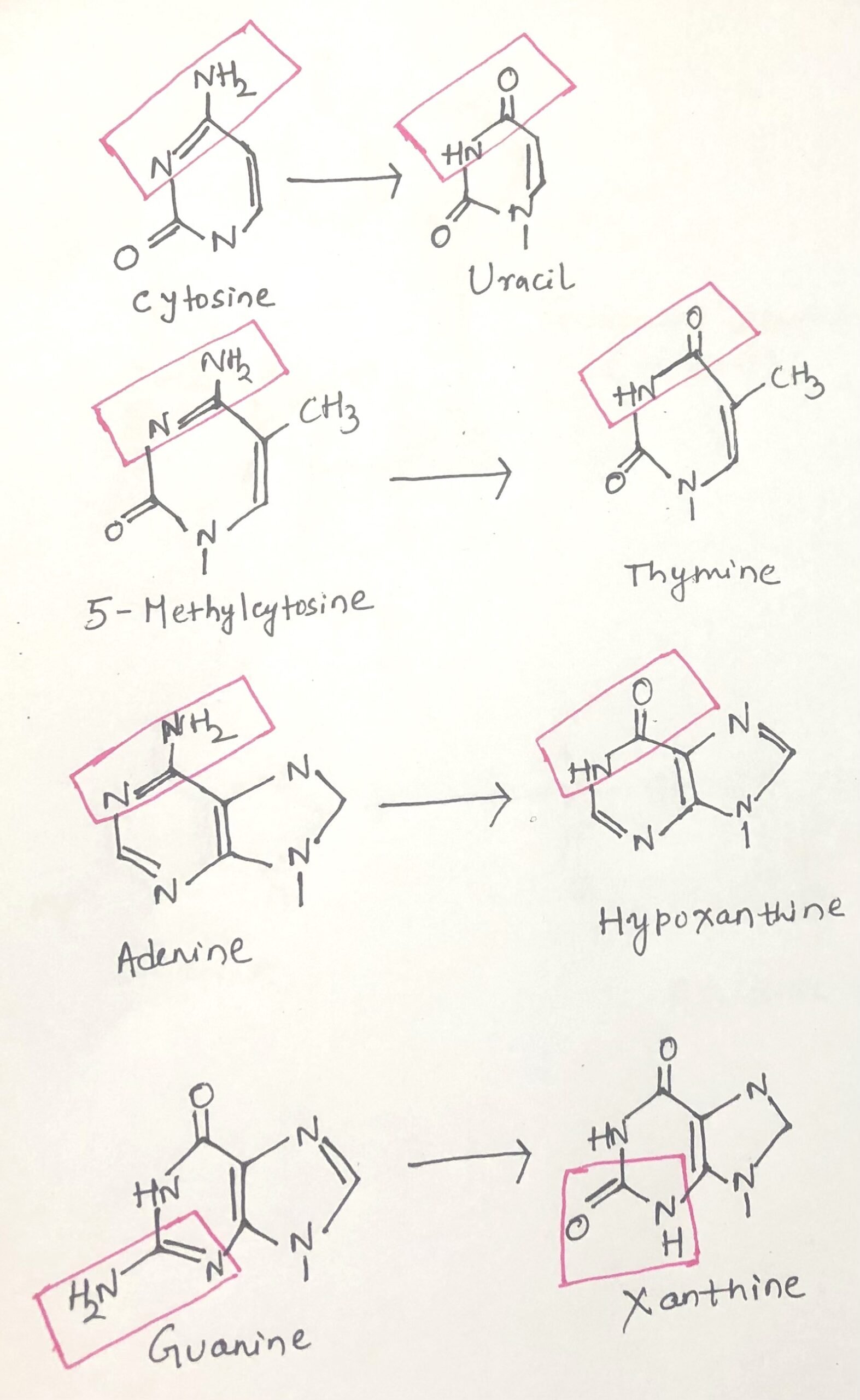
This article briefly describes the spontaneous chemical transformations that occur in nucleotides and nucleic acids and their significance in maintaining genetic stability. It explores various forms of DNA alterations, including deamination, depurination, radiation-induced damage, chemical modifications, and oxidative reactions. It also highlights the biological consequences of these changes, their association with mutations, aging, and carcinogenesis, and the protective role of cellular DNA repair mechanisms in preserving the integrity of genetic information.
DNA Stability and Spontaneous Alterations
The ability of DNA to preserve genetic information over extended periods relies on its inherent chemical stability. Under normal conditions, most chemical alterations in DNA occur slowly without enzymatic catalysis. This stability is essential for maintaining the integrity of genetic information. Nevertheless, even spontaneous reactions occurring at very low rates can produce biologically significant effects when their consequences accumulate over time. The progressive buildup of irreversible DNA damage has been associated with processes such as aging and carcinogenesis. However, not all structural changes in DNA are detrimental. Reversible strand separation, for example, is a necessary step in DNA replication and transcription.
Spontaneous Alterations in Nucleotide Structure and Mutations
Purine and pyrimidine bases, as well as the nucleotides containing them, can undergo spontaneous chemical modifications that alter their covalent structures. Although these reactions generally occur at very low rates, their biological consequences can be substantial because even minor changes in genetic material may affect cellular function. Permanent alterations in the DNA sequence are known as mutations. The progressive accumulation of such genetic changes has been associated with biological processes such as aging and carcinogenesis.
Spontaneous Deamination of DNA Bases
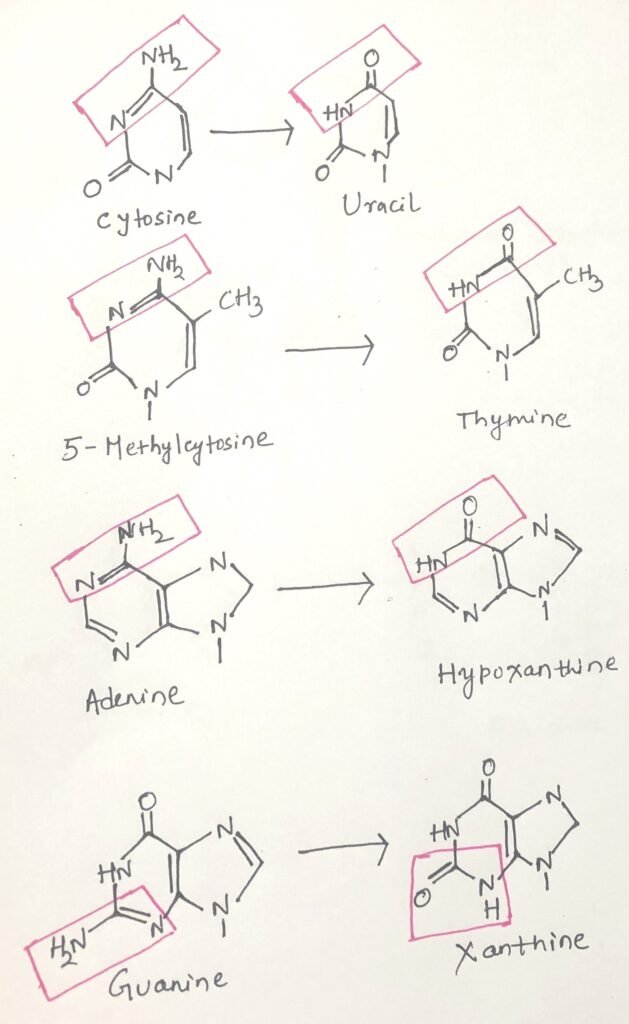
Certain nucleotide bases undergo spontaneous deamination, a chemical reaction that removes an exocyclic amino group (Figure 1). Cytosine is particularly susceptible to this modification and can spontaneously convert into uracil. Under normal cellular conditions, approximately one cytosine residue in every 10⁷ undergoes deamination within 24 hours. This represents roughly 100 such events per day in an average mammalian cell. Adenine and guanine also undergo deamination, but their reaction rates are about 100 times lower than those of cytosine.
The Role of Thymine in Maintaining Genetic Stability
The presence of thymine rather than uracil in DNA is closely related to the need to detect and repair spontaneous cytosine deamination. When cytosine undergoes deamination, it produces uracil, which is recognized as an abnormal base in DNA and subsequently removed by cellular DNA repair mechanisms. This distinction allows cells to identify uracil arising from cytosine damage and correct the resulting lesion.
If uracil were a normal constituent of DNA, distinguishing naturally occurring uracil from uracil generated through cytosine deamination would be considerably more difficult. Unrepaired uracil could pair with adenine during DNA replication, eventually resulting in a permanent change in the DNA sequence. Consequently, repeated cytosine deamination could progressively convert G–C base pairs into A–T base pairs, potentially compromising the integrity of genetic information. The evolutionary use of thymine instead of uracil in DNA therefore provides an important mechanism for maintaining genetic stability over successive generations.
Spontaneous Depurination and Formation of Abasic Sites
Deoxyribonucleotides can undergo spontaneous hydrolysis of the N-glycosidic bond that connects a nitrogenous base to its sugar component. This reaction results in the removal of the base, leaving behind an empty position in the DNA molecule known as an apurinic or apyrimidinic (AP) site, commonly referred to as an abasic site (Figure 2). Purine bases are released more readily than pyrimidines. Under normal cellular conditions, approximately one purine base may be lost for every 10⁵ purine residues within 24 hours. In comparison, the loss of bases from ribonucleotides and RNA occurs much less frequently and generally has fewer physiological consequences.
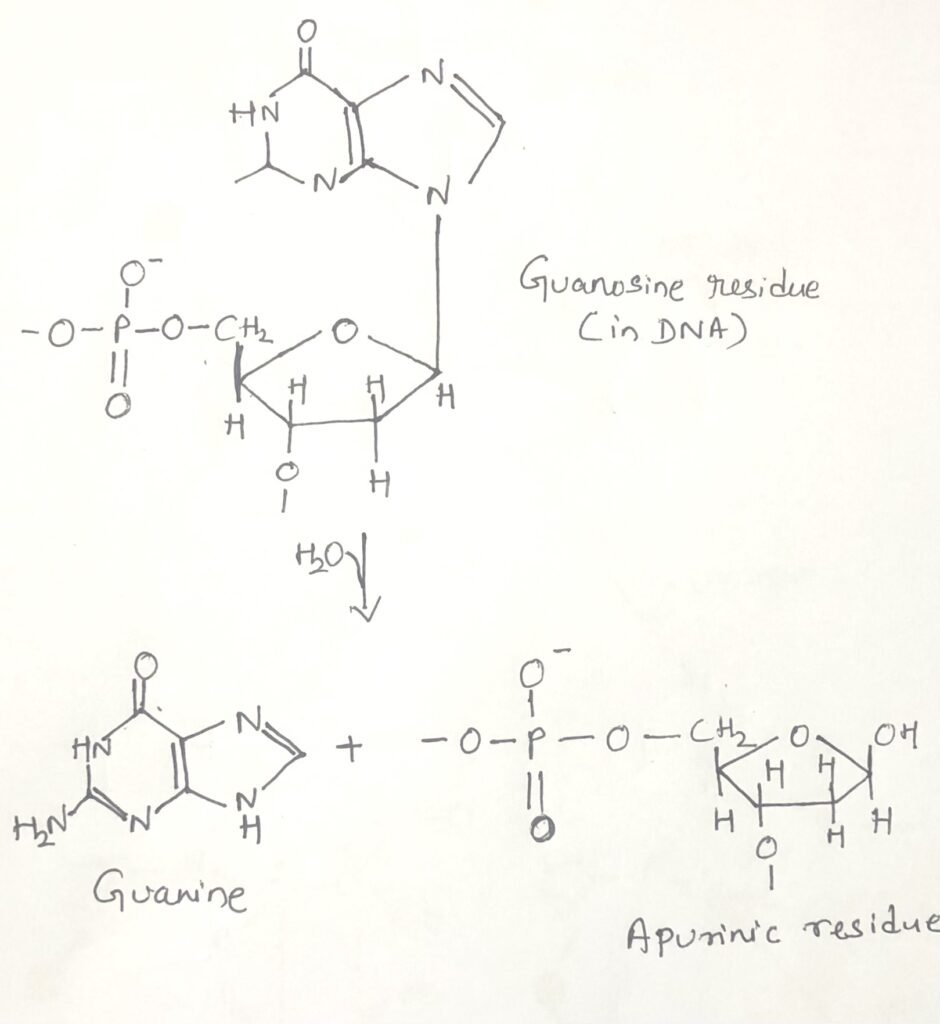
Depurination can also be induced experimentally by exposing DNA to dilute acidic conditions. For instance, incubation at pH 3 preferentially removes purine bases, producing a modified DNA derivative known as apurinic acid.
Radiation-Induced Chemical Alterations in DNA
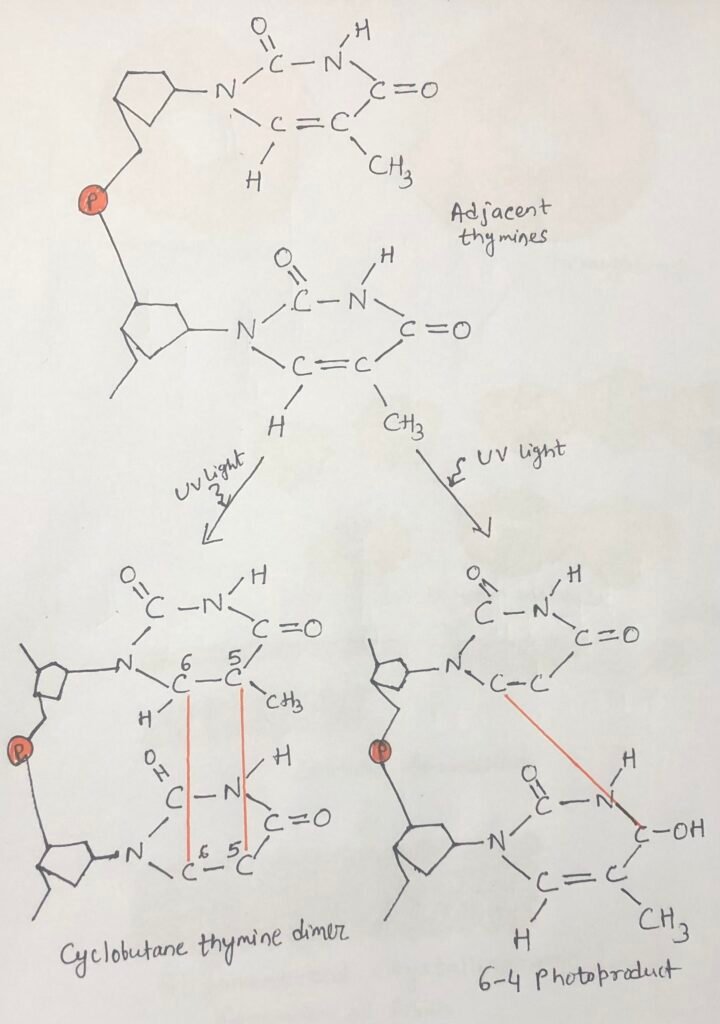
Radiation can trigger several chemical reactions that modify nucleic acid structure. Ultraviolet (UV) radiation, for example, promotes the formation of covalent bonds between neighbouring pyrimidine bases through a photochemical reaction. This commonly produces cyclobutane pyrimidine dimers, particularly between adjacent thymine residues located on the same DNA strand (Figure 3). Another UV-induced lesion, known as a 6–4 photoproduct, can also develop between neighbouring pyrimidine bases. These modifications interfere with the normal structure of DNA and can disrupt essential cellular processes.
Ionizing radiation produces additional forms of DNA damage, including alterations in nitrogenous base structures, fragmentation of bases, and breaks in the sugar-phosphate backbone. Such changes can compromise DNA integrity and interfere with the accurate transmission of genetic information.
Environmental Sources of Radiation-Induced DNA Damage
Living organisms are continuously exposed to different forms of radiation capable of producing chemical alterations in DNA. Solar ultraviolet radiation is an important environmental source of DNA damage and can induce pyrimidine dimer formation and other molecular changes in the genetic material of organisms, including bacteria and human skin cells.
Ionizing radiation also occurs naturally in the environment. Important sources include cosmic radiation and radioactive substances present in the Earth’s crust and atmosphere, such as uranium, radium, and radon. Medical applications, including diagnostic X-rays and radiation therapy, represent additional sources of exposure to ionizing radiation. Certain radioactive isotopes, including carbon-14 and tritium, also contribute to natural background radiation.
Both ultraviolet and ionizing radiation can produce DNA lesions that require cellular repair mechanisms to maintain genomic stability. Some estimates attribute approximately 10% of environmentally induced DNA damage to these forms of radiation, although the actual contribution depends on exposure conditions and the environmental context.
Chemically Induced Alterations in DNA
Apart from spontaneous reactions and radiation exposure, DNA can undergo chemical modifications following contact with reactive substances present in the environment. Several industrial chemicals and environmental contaminants can interact with DNA and alter its nitrogenous bases. Two important categories of such compounds are deaminating agents and alkylating agents.
Deaminating Agents
Certain chemical compounds accelerate the removal of amino groups from nucleotide bases. Nitrous acid (HNO₂), which can form from nitrite under acidic conditions, is a potent deaminating agent. Bisulfite also promotes similar reactions. Nitrite salts and sulfite-based compounds have applications as food preservatives because they help inhibit microbial growth. However, nitrite can participate in reactions that generate potentially harmful nitrosamines under certain conditions. The biological consequences of exposure depend on the compounds involved, their concentrations, and the conditions under which they are consumed or encountered.
Alkylating Agents
Alkylating compounds modify DNA by transferring alkyl groups, such as methyl groups, to specific positions on nitrogenous bases. These modifications can interfere with normal base-pairing behaviour and consequently affect DNA replication. For example, dimethyl sulfate can transfer a methyl group to guanine, producing lesions such as O⁶-methylguanine. This modified base can mispair with thymine instead of pairing normally with cytosine, potentially introducing permanent mutations during DNA replication.
Alkylation can also occur through naturally occurring cellular compounds. S-adenosylmethionine (SAM), an important biological methyl-group donor, can participate in spontaneous methylation reactions involving DNA bases.
Oxidative Damage to DNA
Oxidative damage represents a major source of spontaneous DNA alterations within cells. It primarily results from the action of reactive oxygen species (ROS), including superoxide radicals, hydrogen peroxide, and hydroxyl radicals. These reactive molecules are generated during normal aerobic metabolism and can also arise following exposure to radiation and other environmental factors.
ROS can attack different components of DNA, producing a variety of chemical modifications. These include oxidation of nitrogenous bases, damage to deoxyribose sugars, and breaks in the DNA backbone. Among the different reactive oxygen species, hydroxyl radicals are particularly damaging because of their high chemical reactivity. They can rapidly interact with DNA components and produce several types of oxidative lesions.
Cells possess antioxidant defence mechanisms that help limit oxidative damage. Enzymes such as superoxide dismutase and catalase contribute to this protection by converting reactive oxygen species into less harmful products. Nevertheless, these defence systems cannot eliminate every reactive molecule, allowing some oxidants to interact with DNA. Consequently, cellular genetic material experiences numerous oxidative events during normal metabolism. Estimates suggest that thousands of oxidative DNA lesions may arise in an individual human cell each day, although the actual frequency varies with cellular conditions and the effectiveness of antioxidant and repair systems.
DNA Damage, Carcinogenesis and Repair Mechanisms
Several potentially carcinogenic substances present in food, water and air can exert their harmful effects by chemically modifying DNA bases. If these alterations escape repair and become permanently incorporated into the DNA sequence, they may contribute to mutations and the development of cancer.
Despite its susceptibility to different forms of chemical and physical damage, DNA maintains its genetic integrity through highly developed repair mechanisms. Unlike RNA and proteins, DNA serves as the long-term repository of hereditary information and is therefore supported by extensive biochemical systems dedicated to detecting and correcting molecular damage. These repair pathways recognize various DNA lesions, remove or replace damaged components, and restore the integrity of the genetic material. As a result, DNA repair substantially reduces the accumulation of permanent genetic alterations and helps preserve genomic stability.
Conclusion
Nucleotides and nucleic acids undergo several spontaneous and non-enzymatic chemical transformations that can modify their molecular structures. These changes include deamination, depurination, and other alterations caused by radiation, reactive chemicals, and oxidative agents. Although many of these reactions occur slowly, their cumulative effects can significantly influence the stability and integrity of genetic material. Understanding these transformations provides valuable insight into the chemical vulnerability of nucleic acids and their implications for biological systems.
You may also like:
- DNA Beyond the Double Helix: Structural Variants and Unusual Sequences
- Mitochondrial DNA Origin and Mutational Effects

I, Swagatika Sahu (author of this website), have done my master’s in Biotechnology. I have around fourteen years of experience in writing and believe that writing is a great way to share knowledge. I hope the articles on the website will help users in enhancing their intellect in Biotechnology.