
This article briefly describes natural killer cells and their role in immune defense. Natural killer (NK) cells are a specialized population of innate lymphoid cells that play a fundamental role in protecting the body against infections and malignant transformation. Unlike antigen-specific lymphocytes, NK cells can rapidly recognize and eliminate abnormal cells without prior sensitization, making them an essential component of the early immune response. In addition to their cytotoxic function, they regulate immune responses through the secretion of cytokines and interactions with other immune cells. Their diverse phenotypic characteristics and unique receptor repertoire enable them to respond effectively to a wide range of immunological challenges. This article provides an overview of the biological characteristics, functional roles, and immunological significance of NK cells in maintaining effective immune defense.
Natural Killer Cells as Innate Lymphocytes
Natural killer (NK) cells are specialized cytotoxic lymphocytes that serve as a vital component of the innate immune system. As key mediators of cell-mediated immunity, they provide a rapid first line of defense against virus-infected and malignant cells without requiring prior antigen sensitization. Once activated, NK cells induce apoptosis in abnormal target cells through cytotoxic mechanisms that resemble those employed by cytotoxic T lymphocytes, although they rely on a distinct set of surface receptors for target recognition.
Unlike T and B lymphocytes, NK cells recognize cellular stress rather than antigen specificity. Their ability to eliminate abnormal cells while sparing healthy tissues is tightly controlled by the integration of opposing activating and inhibitory signals received through specialized receptors. The balance between these signals ultimately determines whether an NK cell remains quiescent or initiates a cytotoxic response, ensuring effective immune surveillance while minimizing unintended tissue damage.
Characteristics and Functions of NK Cells
Natural killer (NK) cells constitute approximately 5–10% of circulating lymphocytes. They are distinguished by their ability to eliminate abnormal cells without prior antigen exposure or sensitization. Unlike T and B lymphocytes, NK cells lack antigen-specific receptors. Nevertheless, they are indispensable components of the innate immune system. They provide rapid protection against virus-infected, transformed, and physiologically stressed cells. Dysregulation of NK-cell activity has also been implicated in the development of autoimmune disorders.
Beyond their cytotoxic function, NK cells are increasingly recognized as important immunoregulatory cells. Through the secretion of a diverse range of cytokines and chemokines, they influence both innate and adaptive immune responses. They coordinate the activation and function of other immune cell populations. Furthermore, accumulating evidence has revealed essential non-cytotoxic roles for NK cells in tissue homeostasis and remodeling. A notable example is pregnancy, where uterine NK cells play an essential role in placental development. They promote vascular remodeling through interactions with fetal major histocompatibility complex (MHC) molecules. This process supports healthy placental function and fetal growth.
Role of NK Cells in Early Immune Defense
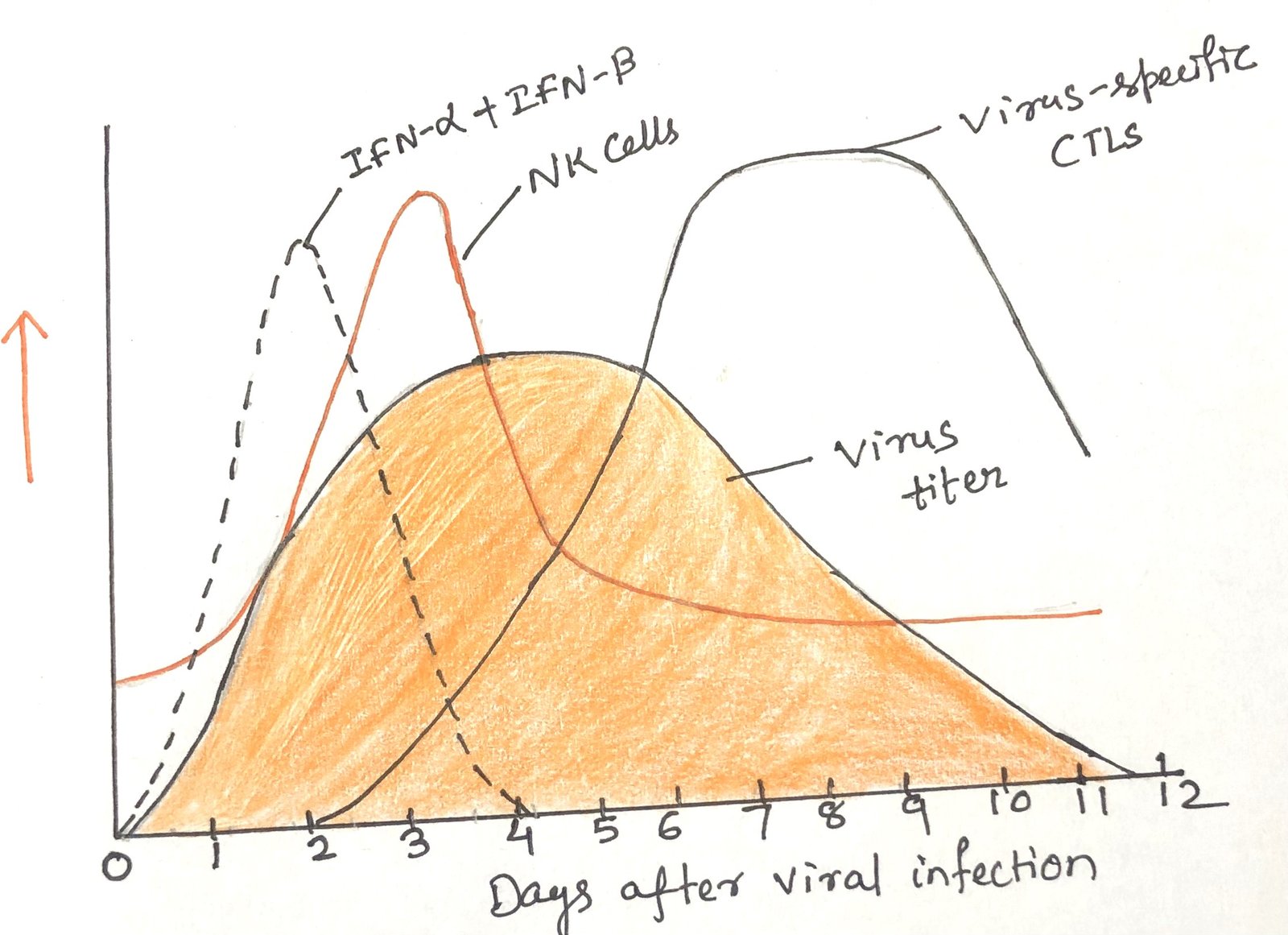
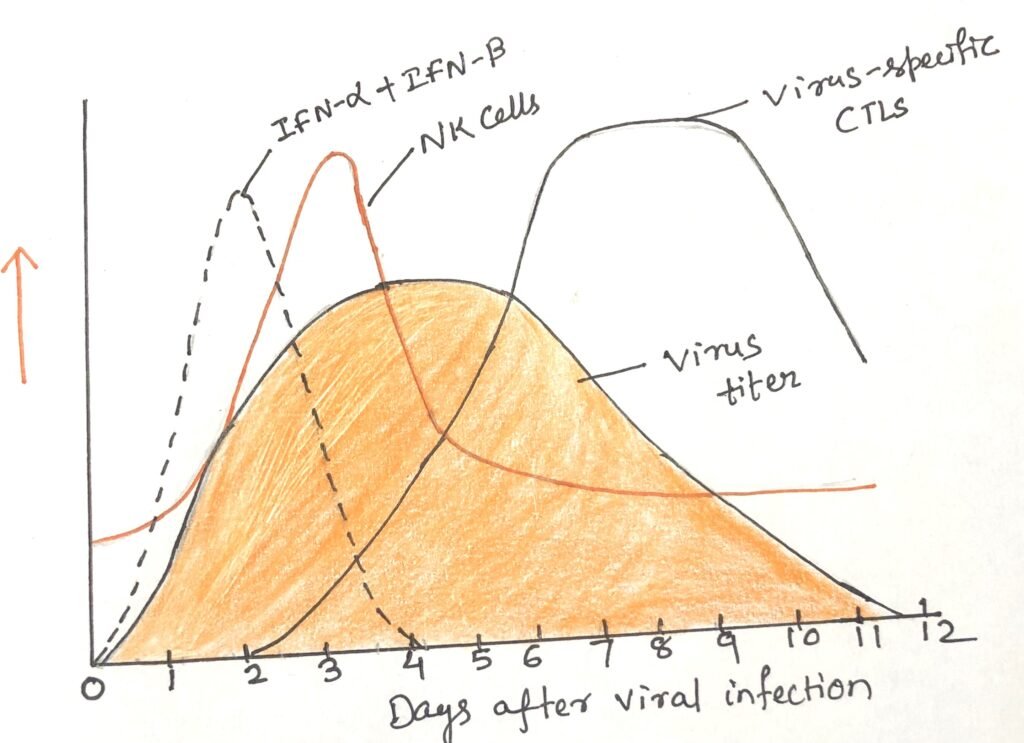
Natural killer (NK) cells constitute one of the earliest cellular defenses against intracellular pathogens, particularly during viral infections. They rapidly recognize and eliminate infected cells, thereby limiting pathogen replication during the initial phase of infection. This early response provides essential protection before antigen-specific cytotoxic T lymphocytes (CTLs) have fully differentiated and expanded. As a result, NK cells help bridge the gap between innate and adaptive immunity.
The cytotoxic activity of NK cells is rapidly enhanced by pro-inflammatory cytokines released during the innate immune response. These cytokines include type I interferons (IFN-α and IFN-β) and interleukin-12 (IL-12). They are produced soon after infection and activate NK cells, resulting in a transient increase in their effector function. NK cell-mediated cytotoxicity usually reaches its peak within the first few days of infection. This early response plays a crucial role in controlling pathogen replication until adaptive immune responses become fully established (Figure 1).
Remarkably, natural killer (NK) cells possess a strong protective capacity. Together with other components of the innate immune system, they can provide effective host defense even in the absence of adaptive immune responses. Experimental studies have shown that innate immune mechanisms, with NK cells serving as major effector cells, can offer substantial protection against infection. This protection can occur even in the absence of functional T- and B-lymphocyte-mediated immunity.
Cytokine-Mediated Immunoregulatory Functions of NK Cells
In addition to their direct cytotoxic activity, natural killer (NK) cells exert significant immunoregulatory effects through the secretion of a wide range of cytokines and chemokines. These soluble mediators enable NK cells to influence both innate and adaptive immune responses. They regulate the activation, recruitment, and functional specialization of various immune cell populations.
Among the cytokines produced by NK cells, interferon-gamma (IFN-γ) plays a central role in enhancing the antimicrobial capacity of macrophages. It promotes phagocytosis, increases intracellular microbial killing, and improves antigen presentation. Furthermore, NK cell-derived interferon-gamma (IFN-γ) promotes the polarization of CD4⁺ T helper cells toward a TH1 phenotype. It does so by stimulating interleukin-12 (IL-12) production from macrophages and dendritic cells. At the same time, IFN-γ suppresses TH2-mediated immune responses. In addition, NK cells secrete tumor necrosis factor-alpha (TNF-α), granulocyte-macrophage colony-stimulating factor (GM-CSF), and various chemokines. These mediators recruit and activate macrophages, thereby strengthening local inflammatory and innate immune responses.
Phenotypic Diversity and Surface Receptors of NK Cells
Natural killer (NK) cells are a heterogeneous population consisting of multiple subsets with distinct phenotypes, maturation stages, and functional properties. These subsets can be identified by differences in their cell-surface marker expression and their ability to produce immunologically active molecules. In mice, NK cells typically express markers such as CD122, NK1.1, CD49b, CD2, and the low-affinity Fc receptor FcγRIII (CD16). In contrast, human NK cells express CD122 and CD16 but do not express NK1.1. Instead, they are primarily identified by the expression of CD56, a cell surface adhesion molecule. The level of CD56 expression varies according to the developmental stage and functional specialization of individual NK-cell subsets.
A defining characteristic of natural killer (NK) cells is the expression of a diverse repertoire of activating and inhibitory natural killer receptors (NKRs) on their surface. These receptors allow NK cells to distinguish healthy cells from abnormal or infected cells. They also determine whether a cytotoxic response should be initiated. Although human and murine NK cells express different receptor families, the fundamental mechanism regulating NK-cell activation is highly conserved across species. Moreover, individual NK cells differ considerably in both the number and combination of activating and inhibitory receptors they express. This receptor diversity gives rise to a highly heterogeneous NK-cell population that can recognize and respond to a wide range of physiological and pathological conditions.
Conclusion
Natural killer (NK) cells are indispensable components of the innate immune system. They provide rapid protection against infected, transformed, and stressed cells through their potent cytotoxic activity. Beyond their direct effector functions, NK cells play a crucial role in shaping immune responses by secreting cytokines. This influences the activity of both innate and adaptive immune cells. Their phenotypic diversity and dynamic repertoire of surface receptors enable them to respond effectively to a wide range of physiological and pathological challenges while maintaining immune homeostasis. Collectively, these unique characteristics establish NK cells as central mediators of immune defense. This highlights their essential contribution to host protection and overall immune regulation.
You may also like:
- The external barriers of innate immunity
- Primary Immunodeficiency Results in Different Immunodeficiency Syndromes
- Contraction of our immune response and the response of effector and memory lymphocytes
- NK Cell Receptors in Immune Recognition and Regulation

I, Swagatika Sahu (author of this website), have done my master’s in Biotechnology. I have around fourteen years of experience in writing and believe that writing is a great way to share knowledge. I hope the articles on the website will help users in enhancing their intellect in Biotechnology.