
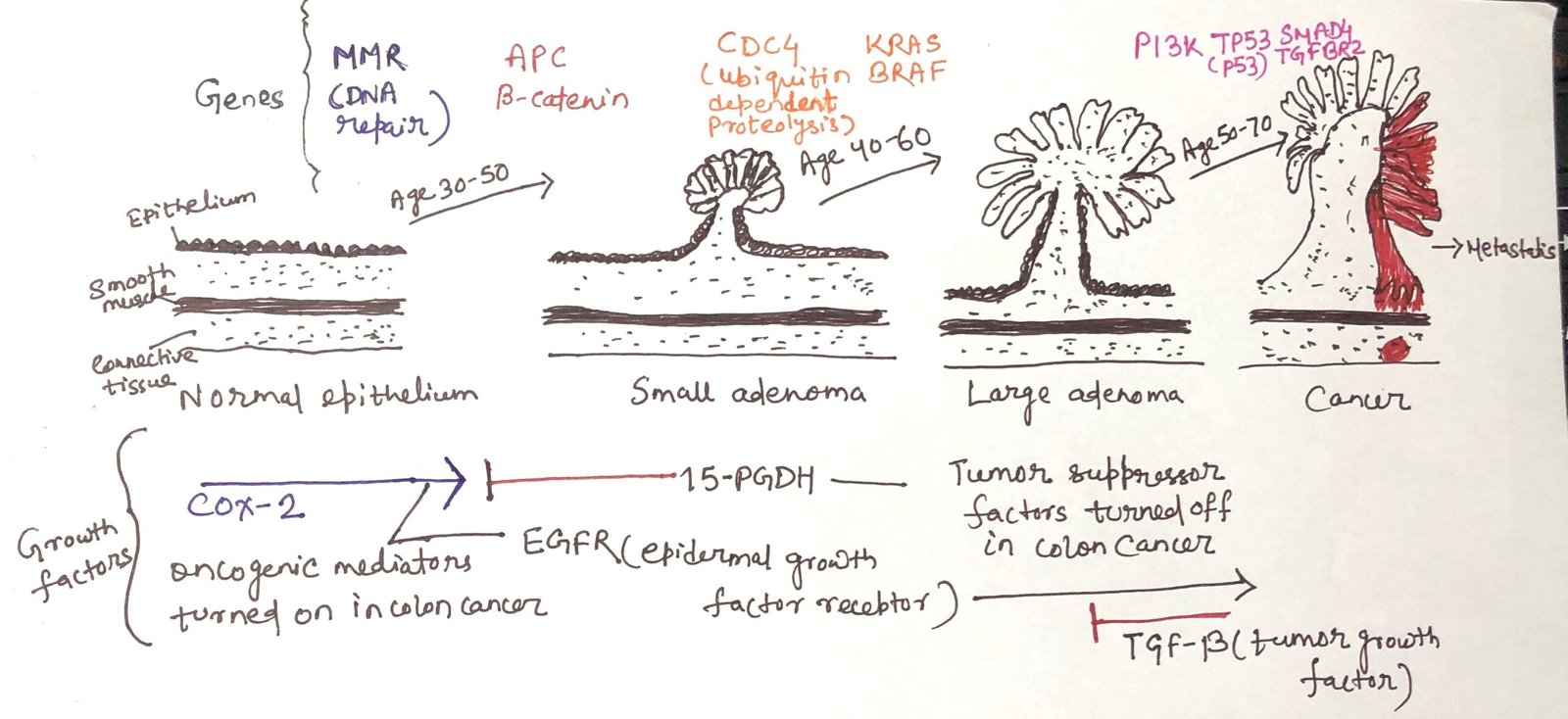
This article briefly describes the roles of tumor suppressor genes, stability genes, and the accumulation of genetic mutations in the initiation and progression of cancer. Cancer is a genetic disease that arises when normal mechanisms controlling cell growth and division become disrupted. Mutations in specific genes can alter cellular functions, allowing abnormal cells to multiply uncontrollably and eventually form tumors. Understanding the genetic basis of cancer is essential for explaining how the disease develops and progresses.
The Role of Tumor Suppressor Genes in Maintaining Cellular Growth Control
Tumor suppressor genes encode proteins that normally restrain cell division and maintain controlled cell growth. Mutations in one or more of these genes can remove these regulatory mechanisms and contribute to tumor formation. Unlike oncogenes, whose effects are generally genetically dominant, the loss of tumor suppressor gene function is usually genetically recessive, meaning that both copies of a tumor suppressor gene must typically be defective for uncontrolled cell growth to occur. This is because a single normal copy can often produce enough functional protein to maintain proper inhibition of cell division.
In individuals who inherit one defective copy and one normal copy of a tumor suppressor gene, all cells initially carry one mutated allele. A second mutation that inactivates the remaining normal copy can eliminate growth control, allowing abnormal cell proliferation and potentially leading to tumor formation. Mutations affecting both copies of genes such as pRb, p53, or p21 can therefore result in the loss of normal restraints on cell division.
The Rb Gene and the Development of Retinoblastoma
Retinoblastoma is a childhood eye cancer that can lead to severe vision loss or blindness if not diagnosed and treated promptly. The disease develops when both copies of the Rb tumor suppressor gene become nonfunctional within retinal cells. In many affected children, numerous tumors appear in both eyes at an early age. This pattern is often associated with the inheritance of one mutated Rb allele from a parent. As a result, every cell in the child’s body already carries a defective copy of the gene.
Tumor formation occurs when a retinal cell acquires a second mutation that disables the remaining normal allele, eliminating the growth-regulating function of the Rb protein. This phenomenon illustrates the “two-hit” model of tumor suppressor gene inactivation. Individuals who survive hereditary retinoblastoma also face an increased lifetime risk of developing other malignancies, including cancers of the lung, prostate, and breast, highlighting the critical role of the Rb gene in preventing uncontrolled cell proliferation.
Sporadic Retinoblastoma
In rare cases, retinoblastoma can arise in children who inherit two normal copies of the Rb gene. For a tumor to develop under these circumstances, both alleles of the gene must undergo separate mutations within the same retinal cell, an event that occurs infrequently. As a result, these children typically develop a single tumor confined to one eye and are often diagnosed at a later age than those with hereditary retinoblastoma. The disease originates when successive genetic alterations eliminate the function of both copies of the Rb gene in an individual retinal cell, allowing uncontrolled cell proliferation. Since retinal cells gradually lose their ability to divide after approximately three years of age, the opportunity for such mutations to accumulate decreases significantly. Consequently, the occurrence of retinoblastoma becomes increasingly uncommon beyond early childhood.
Stability Genes and Their Role in Cancer Prevention
The integrity of the genome is protected by a group of genes known as stability genes, which produce proteins responsible for detecting and repairing DNA damage. Such damage may arise from errors during DNA replication, exposure to radiation, or contact with environmental agents that cause cancer. When these protective genes become mutated, DNA lesions accumulate and remain unrepaired, increasing the likelihood that critical regulatory genes will also be altered. As a consequence, mutations can build up in proto-oncogenes and tumor suppressor genes, promoting the development of cancer.
Humans have several important stability genes. These include ATM, which participates in cellular responses to DNA damage, and members of the XP gene family, whose defects give rise to the disorder xeroderma pigmentosum. Another well-known example is BRCA1, a gene involved in DNA repair that is strongly associated with hereditary forms of breast cancer. Among the genes that safeguard cells from malignant transformation, p53 occupies a central position. Mutations alter this gene in a large proportion of human cancers, making it one of the most frequently mutated cancer-related genes. Individuals who inherit a defective copy of p53 may develop Li-Fraumeni syndrome, a rare inherited disorder characterized by an unusually high risk of multiple cancers occurring at an early age. These observations highlight the crucial role of genome maintenance and cell-cycle control genes in safeguarding the body against tumor formation.
The Multistep Genetic Pathway to Cancer Development
Cancer does not usually arise from a single genetic alteration. Instead, it develops through the gradual accumulation of mutations affecting three major groups of genes: oncogenes, tumor suppressor genes, and stability genes. Changes in these genes generally have cumulative rather than all-or-nothing effects, with each mutation contributing to the progressive transformation of a normal cell into a malignant one. Consequently, cancer is often the result of multiple genetic events occurring over time rather than a single defective gene.
The Sequential Genetic Evolution of Colorectal Cancer
Colorectal cancer provides one of the clearest examples of this multistep process. The earliest stage commonly begins when both copies of the APC tumor suppressor gene become inactivated in a colon epithelial cell. This loss of function promotes excessive cell division, leading to the formation of a benign polyp. The loss of normal APC activity also promotes chromosomal instability, increasing the likelihood of additional genetic alterations through chromosome loss or rearrangement during cell division.
As further mutations accumulate, the tumor progresses through increasingly advanced stages (Figure 1). A mutation in the ras proto-oncogene often converts the benign polyp into an intermediate adenoma, while subsequent mutations produce a late adenoma. The final transition to an invasive colorectal carcinoma typically occurs only after both copies of the p53 tumor suppressor gene become defective, removing one of the cell’s most important safeguards against uncontrolled growth. In many cases, additional alterations involving the DCC tumor suppressor gene also contribute to disease progression.
Cellular Defense Against Cancer
Overall, the development of colorectal cancer generally requires at least seven critical genetic “hits,” including mutations affecting APC, DCC, p53, and ras. Although alternative molecular pathways can also lead to colorectal cancer, the underlying principle remains the same: malignant tumors arise through the sequential accumulation of multiple genetic changes. Because these mutations build up over many years, the likelihood of developing advanced, metastatic cancer increases with age.
Early detection and surgical removal of polyps at the adenoma stage prevent the progression to late adenomas and carcinomas. Cells and organisms, too, have their early detection systems. For example, the ATM and ATR proteins can detect DNA damage too extensive to be repaired effectively. They then trigger, through a pathway that includes p53, the process of apoptosis, in which a cell that has become dangerous to the organism kills itself.
Identifying Driver Mutations Through Cancer Genome Sequencing
Recent advances in high-throughput DNA sequencing have transformed our understanding of cancer genetics. The ability to sequence entire genomes rapidly and at relatively low cost has enabled researchers to examine the complete genetic makeup of thousands of tumors. In one large-scale investigation, scientists analyzed the sequences of approximately 20,000 genes from more than 3,300 human tumors and compared them with healthy tissue obtained from the same individuals. This comprehensive analysis uncovered nearly 300,000 genetic mutations across all tumor samples.
Despite the enormous number of mutations detected, only a small proportion actively contributed to cancer development. These disease-causing alterations, known as driver mutations, provide cells with growth or survival advantages that promote tumor progression. In contrast, the overwhelming majority were passenger mutations, which arise incidentally during cell division and have little or no influence on cancer formation.
Scientists found driver mutations in many cancer-associated genes, including about 75 tumor suppressor genes and 65 oncogenes. Collectively, these mutations primarily affected three fundamental cellular processes: the regulation of cell survival, the control of cell fate—determining whether cells divide, differentiate, or remain resting—and other key pathways that govern normal cellular behavior. Understanding these driver mutations has greatly improved our knowledge of the molecular mechanisms underlying cancer and has paved the way for the development of more precise diagnostic tools and targeted therapies.
Conclusion
Cancer is a complex genetic disease that develops through the gradual accumulation of mutations affecting oncogenes, tumor suppressor genes, and stability genes. These genetic alterations disrupt the normal mechanisms that regulate cell growth, DNA repair, and cell survival, ultimately leading to uncontrolled cell proliferation. Research on hereditary disorders such as retinoblastoma and large-scale cancer genome sequencing has significantly advanced our understanding of the molecular events that drive tumor development. The distinction between driver and passenger mutations has further clarified how only a limited number of genetic changes are responsible for initiating and sustaining cancer. Continued progress in cancer genetics and genomic technologies is improving early diagnosis, risk assessment, and the development of targeted therapies, offering new opportunities for more effective and personalized approaches to cancer prevention and treatment.
You may also like:
- Tumor Immune Escape Mechanisms and Apoptotic Resistance
- Viruses as Hidden Causes of Cancer
- Immunotherapies Redefining Cancer Treatment
- Methods for Measuring Cell Proliferation and Division

I, Swagatika Sahu (author of this website), have done my master’s in Biotechnology. I have around fourteen years of experience in writing and believe that writing is a great way to share knowledge. I hope the articles on the website will help users in enhancing their intellect in Biotechnology.